
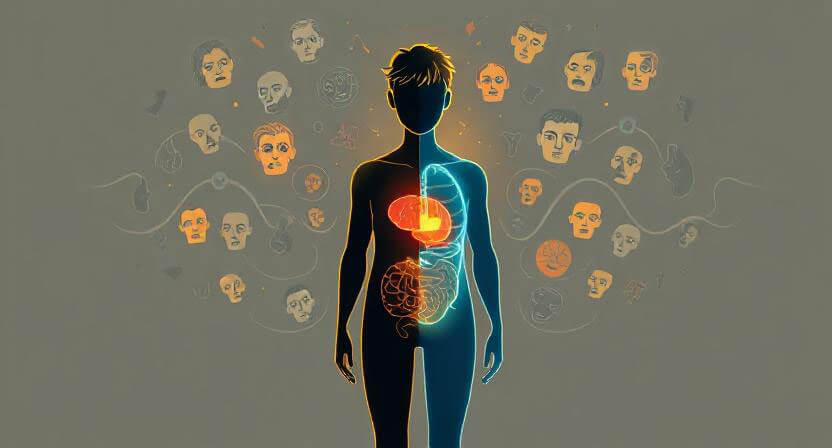
When we talk about burnout, we often focus on the emotional and mental aspects – feeling overwhelmed, losing motivation, or experiencing compassion fatigue. But there’s a crucial piece that gets overlooked: the profound metabolic impact of being everyone’s go-to person for emotional support. If you’re someone who naturally becomes the counselor, mediator, or emotional anchor in your relationships, your body is doing work that has real, measurable physiological costs.
The term “emotional labor” has gained popularity in recent years, but most discussions focus on the fairness and distribution of this work rather than its biological impact. What’s missing from these conversations is an understanding of how absorbing and processing others’ emotions affects your metabolism, hormone balance, immune function, and overall physical health.
When you’re constantly managing other people’s emotional states, your body operates as if you’re experiencing multiple stressors simultaneously. Your nervous system doesn’t have the capacity to distinguish between stress you’re experiencing directly and stress you’re absorbing from others. This means that when three different friends call you with their problems in one day, your body responds as if you’re personally going through three separate crises.
This response triggers a cascade of physiological changes that go far beyond feeling emotionally drained. Your adrenal glands release stress hormones like cortisol and adrenaline, your blood sugar levels fluctuate as your body mobilizes energy for perceived emergencies, your digestive system slows down as resources are diverted to stress response, and your immune function becomes suppressed as your body prioritizes immediate survival over long-term health maintenance.
Read Also: Decoding Your Body’s Language: What Your Inflammation Is Trying to Tell You
The cumulative effect of these responses is what researchers call allostatic load – the biological wear and tear that results from chronic activation of stress response systems. For people who routinely absorb others’ emotional stress, this load accumulates much faster than for those with more stable stress levels, leading to a wide range of health issues that often get misdiagnosed or inadequately treated because healthcare providers don’t account for the metabolic cost of emotional labor.
One of the most common and misunderstood manifestations of this metabolic stress is blood sugar dysregulation that doesn’t correlate with dietary choices. You might notice that your energy crashes after emotionally intense conversations, that you crave sugar following family drama, or that your appetite disappears entirely during periods when you’re managing multiple people’s crises. These aren’t character flaws or signs of poor self-control – they’re your body’s appropriate response to the glucose demands of processing complex emotional information.
Your brain uses approximately 20% of your body’s total energy under normal circumstances, but this percentage increases significantly when you’re doing emotional processing work. Managing your own emotions requires energy, but managing others’ emotions while simultaneously trying to regulate your own response to their stress requires substantially more cognitive resources and metabolic fuel.
Sleep disruption is another common consequence of chronic emotional labor that’s often misunderstood. When you’re mentally carrying multiple people’s problems, your brain has significantly more information to process during sleep cycles. The restorative functions that should happen during deep sleep get compromised because your nervous system can’t fully relax when it’s holding the emotional weight of multiple people’s stress and trauma.
This explains why you might feel tired even after getting adequate hours of sleep, or why your dreams become filled with other people’s problems and conflicts. Your brain is literally working overtime to sort through and process emotional information that doesn’t originate from your own direct experience but has become part of your mental and emotional load through your caregiving role.
You May Like To Read Also: Your Body Speaks: Understanding the Emotional Messages Behind Your Physical Symptoms
Digestive issues frequently accompany chronic emotional labor, but the connection often goes unrecognized. Your gut houses what scientists call your “second brain” – a complex network of neurons that communicate directly with your central nervous system. When you’re absorbing chronic stress from others, this gut-brain connection becomes dysregulated, leading to symptoms like stomach upset during family gatherings, changes in appetite that correlate with others’ emotional states, or digestive sensitivity that seems to appear and disappear without clear dietary triggers.
The immune system also pays a significant price for chronic emotional labor. Stress hormones suppress immune function as an evolutionary adaptation that prioritizes immediate survival over long-term health maintenance. When you’re regularly absorbing others’ stress, your immune system stays partially suppressed, making you more susceptible to infections, slower to heal from injuries, and more likely to develop autoimmune conditions where your immune system becomes dysregulated and attacks your own tissues.
Hormone balance suffers under the constant stress of emotional labor as well. Chronic elevation of stress hormones interferes with the production and regulation of other crucial hormones including those that control metabolism, reproduction, and growth and repair processes. This is why many people who do extensive emotional labor struggle with issues like thyroid dysfunction, reproductive hormone imbalances, and disrupted circadian rhythms that affect everything from sleep to mood to energy levels.
Perhaps most concerning is the cardiovascular impact of chronic emotional stress absorption. Your heart rate and blood pressure increase every time you absorb someone else’s emotional crisis, just as they would if you were experiencing that crisis directly. Over time, this repeated cardiovascular activation contributes to inflammation, arterial damage, and increased risk of heart disease and stroke.
The tragedy is that many healthcare providers miss these connections entirely, treating symptoms in isolation rather than recognizing the underlying pattern of metabolic stress from emotional labor. Patients get diagnosed with anxiety disorders, depression, chronic fatigue syndrome, fibromyalgia, irritable bowel syndrome, and a host of other conditions without anyone asking about their role as the family emotional manager or their history of absorbing others’ stress.
You May Love To Read Also: Seasonal Living: The Missing Key to Your Metabolic Health
Understanding these connections doesn’t mean that emotional labor is inherently harmful or that you should stop caring about others. It means recognizing that this work has real physiological costs that need to be acknowledged and addressed. Just as we wouldn’t expect someone to do physically demanding work without adequate nutrition, hydration, and recovery time, we shouldn’t expect people to do emotionally demanding work without appropriate support for their metabolic and nervous system needs.
This recognition fundamentally changes how we approach self-care for highly sensitive people and those in caregiving roles. It’s not enough to add relaxing activities to your schedule if you’re not addressing the underlying metabolic stress from emotional labor. You need strategies that specifically support your nervous system’s ability to discharge absorbed stress, restore depleted resources, and create boundaries that prevent chronic overactivation of stress response systems.
The goal isn’t to become emotionally disconnected or to stop supporting the people you care about. The goal is to develop sustainable ways of caring that don’t systematically deplete your own biological resources. This requires both individual strategies for managing the metabolic impact of emotional labor and broader cultural recognition that this work is real, valuable, and comes with genuine costs that deserve to be acknowledged and supported.
Your body has been keeping the score of every emotion you’ve absorbed, every crisis you’ve managed, and every time you’ve prioritized others’ emotional needs over your own basic biological requirements. It’s time to start honoring the real work you’ve been doing and giving your body the support it needs to continue doing that work in ways that enhance rather than deplete your health and wellbeing.
Let’s connect other ways too! Follow me here on Instargram @doctorrileysmith and at youtube @doctorrileysmith
Related Post:
The Hidden Toll on Empaths and Sensitive People
How to Support Your Nervous System Through Seasonal Triggers