
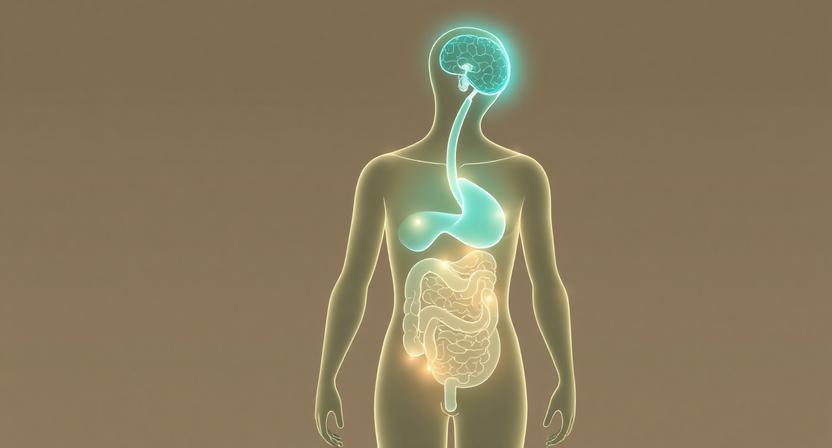
Your digestive system is far more than a food processing plant. It’s actually your body’s second brain, containing more nerve cells than your spinal cord and producing neurotransmitters that directly influence your mood, anxiety levels, and overall well-being. But perhaps most importantly for those who tend to absorb emotions and care for others, your gut is constantly processing much more than just the food you eat – it’s processing the emotional content of your daily life.
The phrase “gut feeling” isn’t just a metaphor. Your enteric nervous system, the complex network of neurons lining your digestive tract, is in constant communication with your brain, sending and receiving signals about safety, stress, and emotional states. When you “swallow” your feelings, suppress your authentic responses, or take in emotional content that’s difficult to process, your digestive system responds as if you’ve consumed something that needs to be broken down, absorbed, or eliminated.
This connection becomes especially significant for people who naturally take on the role of emotional caretaker in their relationships and families. Every time someone shares their problems with you, every crisis you help navigate, every difficult emotion you absorb from others creates a form of emotional indigestion that your gut must somehow process alongside your physical food.
Think about how your stomach feels during or after emotionally challenging conversations. Notice what happens to your appetite when you’re dealing with interpersonal conflict. Pay attention to your digestion during periods of high emotional responsibility. Your gut is responding to the emotional environment just as much as it responds to what’s on your plate.
The gut-brain connection operates through several pathways, including the vagus nerve, hormonal signals, and the immune system. When you’re in a state of emotional stress – whether from your own experiences or from absorbing others’ distress – your sympathetic nervous system activates, sending signals to your digestive system to slow down or shut down entirely.
This made evolutionary sense when stress meant physical danger that required all available energy for fighting or fleeing. But in modern life, where emotional stress can be chronic and subtle, this response leaves your digestive system chronically compromised. Your stomach produces less acid, your intestines slow their movement, and your body’s ability to break down and absorb nutrients becomes impaired.
You May Like To Read Also: How to Harness Your Gift Without Overwhelm
The result is a range of digestive symptoms that seem mysterious when you only consider dietary factors. Bloating after meals that have nothing obviously problematic in them. Nausea during anticipation of difficult conversations. Constipation when emotions feel stuck and unexpressed. Diarrhea during periods of high stress or overwhelm. These symptoms often have more to do with your emotional state than your food choices.
For highly sensitive people and natural helpers, there’s an additional layer of complexity. The same nervous system wiring that makes you excellent at reading others’ emotions also makes you more susceptible to absorbing their emotional states. When you unconsciously take on someone else’s anxiety, anger, or sadness, your gut responds as if these emotions belong to you.
This is why you might notice that your digestive symptoms worsen around certain people or in specific emotional environments. Your gut is trying to process not just your own emotional experience, but the emotional content you’re absorbing from others. Over time, this can create chronic inflammation, altered gut bacteria, and a digestive system that’s constantly trying to manage more than it was designed to handle.
The gut produces about 90% of your body’s serotonin, the neurotransmitter associated with mood regulation and feelings of well-being. When your digestive system is chronically stressed from emotional overload, this serotonin production becomes disrupted, which can contribute to anxiety, depression, and emotional instability. It’s a vicious cycle where emotional stress creates digestive problems, which then worsen your emotional resilience.
You May Love To Read Also: How to Stop Absorbing Other People’s Anxiety and Protect Your Nervous System
Your gut bacteria, collectively known as your microbiome, also respond to emotional states. Chronic stress alters the composition of gut bacteria, reducing beneficial strains and allowing potentially harmful bacteria to proliferate. This shift in gut bacteria can influence everything from immune function to neurotransmitter production to inflammatory responses throughout your body.
Understanding this connection opens up new possibilities for healing digestive issues that have been resistant to dietary interventions alone. While food choices absolutely matter for gut health, emotional choices matter just as much. What you consume emotionally has a direct impact on your digestive function.
Learning to express emotions instead of swallowing them can be profoundly healing for your digestive system. This might mean having difficult conversations instead of avoiding them, setting boundaries instead of absorbing everyone’s problems, or finding healthy ways to discharge emotional tension instead of holding it in your body.
The phrase “getting it off your chest” points to this connection. When you express what needs to be said, when you release emotions that have been stuck, when you stop taking in more emotional content than you can healthily process, your digestive system often improves dramatically.
Creating boundaries around what emotional content you consume is just as important as being mindful about food. This might mean limiting exposure to news or social media when your system is already overwhelmed, choosing which other people’s crises you engage with and when, or developing techniques for clearing absorbed emotions at the end of each day.
Read Also This Article: How Anticipatory Anxiety Destroys Your Gut Bacteria
Eating in a calm, parasympathetic state rather than while stressed, rushed, or emotionally activated can also transform your digestive health. When your nervous system is regulated, your body can properly produce digestive enzymes, absorb nutrients, and eliminate waste effectively.
Practices that support both emotional and digestive health include breathwork that activates the vagus nerve, gentle movement that helps discharge stored emotions, and mindfulness practices that help you distinguish between your emotions and others’ emotions.
Your gut symptoms are information about what you’re consuming emotionally, not just nutritionally. Chronic bloating might be telling you about emotions you’re swallowing instead of expressing. Digestive upset after certain interactions might be your body’s way of saying it can’t process any more emotional content from that source.
The goal isn’t to become emotionally disconnected or to stop caring about others. The goal is to learn the difference between healthy empathy that connects you to others and unhealthy absorption that overwhelms your system. Your gut can be a guide in this process, giving you real-time feedback about when you’re taking in more than you can healthily process.
Healing digestive issues often requires addressing both what you’re putting in your mouth and what you’re putting in your emotional system. Your gut is trying to tell you something important about the connection between your emotional life and your physical health. Learning to listen to and honor this connection can transform not just your digestion, but your overall well-being.
Let’s connect other ways too! Follow me here on Instargram @doctorrileysmith and at youtube @doctorrileysmith
Related Articles: