
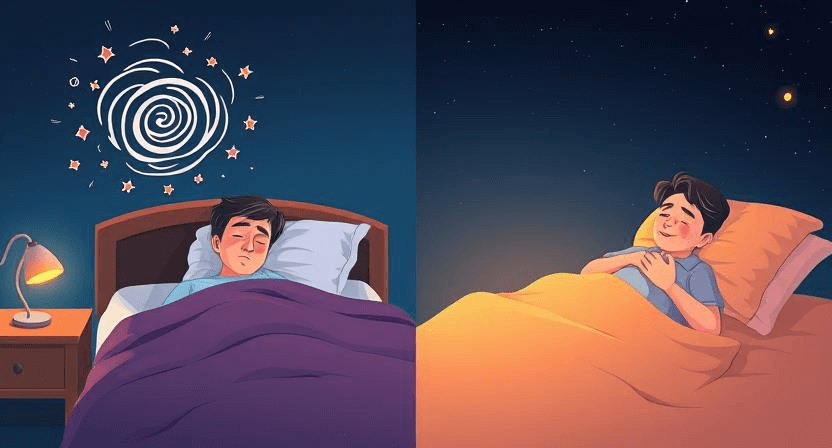
Have you ever noticed that your inner critic gets loudest at night? The thoughts that tell you what you didn’t accomplish or what you should have done differently can make it nearly impossible to fall asleep. Negative self-talk doesn’t just affect your mood—it disrupts your sleep cycles, increasing stress hormones and delaying deep rest.
How Self-Talk Affects Sleep
When we criticize ourselves before bed, our bodies interpret it as stress. This keeps cortisol levels elevated and suppresses melatonin, making it harder to fall and stay asleep. Instead of drifting into deep rest, we remain in a hyper-alert state, tossing and turning with racing thoughts.
Shifting to Compassion for Better Sleep
A simple way to calm the mind before bed is to place a hand on your heart and say, “I’ve done enough today. I deserve rest.” Practicing self-kindness at night signals to your nervous system that it is safe to relax. Small changes in your bedtime self-talk can lead to a significant improvement in sleep quality.
Conclusion
Your mind and body need rest to heal and function well. Replacing self-judgment with compassion can be one of the most effective ways to support deep, restorative sleep.
Let’s connect other ways too! Follow me here on Instargram @doctorrileysmith and at youtube @doctorrileysmith
You May Like To Read Also:
Spring Energy Reset: Balancing Blood Sugar and Supporting Mitochondria
Nourishing Heart and Body: The Ancient Wisdom of Winter Eating
Winter’s Medicine: A Season for Shadow Work and Metabolic Healing