
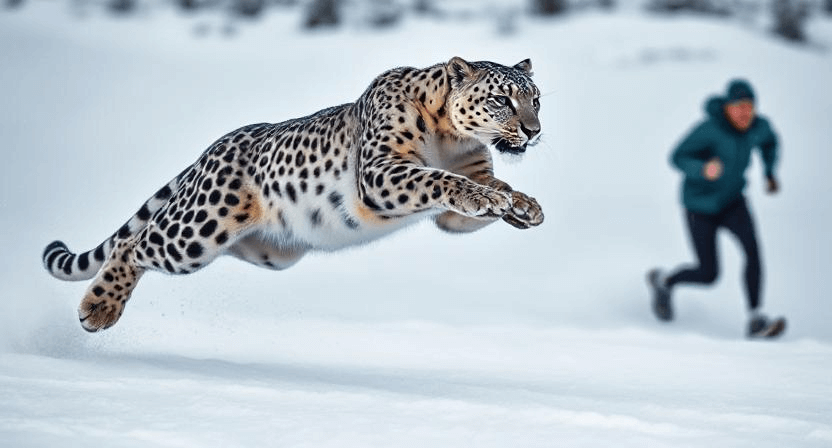
The other day, I was watching a snow leopard video that stopped me in my tracks. This magnificent creature moved in powerful, precise bursts – nothing like the endurance-focused training so many of us force ourselves through during winter months. It got me thinking about how we’ve lost touch with our natural winter movement patterns, and what science tells us about optimal cold-weather training.
Here’s what fascinated me: our bodies are actually programmed for different movement patterns during winter. Just like that snow leopard, we’re designed for power and conservation rather than endurance and volume. Yet so many of us fight this natural rhythm, grinding through long cardio sessions and wondering why we feel depleted.
The science behind this is pretty remarkable. During winter months, our metabolism shifts to favor glucose preservation and quick energy systems. Think about our ancestors – they weren’t running marathons in December. They were conserving energy, moving in strategic bursts when needed, and spending more time in rest and recovery.
This isn’t just evolutionary theory it’s backed by modern research on metabolic health. Studies show that our bodies process energy differently in cold conditions. Cold exposure increases our metabolic demands, making proper recovery between efforts crucial for adaptation. When we ignore these patterns and push through long training sessions, we’re essentially fighting our own biology.
What’s particularly interesting is how this connects to our hormone production. Winter movement patterns that align with our biology – think strength training, power movements, and short, intense bursts – actually support optimal hormone production. These movements stimulate growth hormone release and support insulin sensitivity in ways that long, grinding cardio sessions don’t.
Let’s talk about what this means practically. I’ve seen remarkable transformations in clients who switch to winter-aligned movement patterns. Take Sarah, for instance. She used to pride herself on maintaining her two-hour training sessions year-round. But she constantly battled fatigue and got sick frequently during winter months. When she switched to shorter, more intense training sessions with longer recovery periods, everything changed. Her energy improved, her strength increased, and surprisingly, she maintained better metabolic health markers than with her previous routine.
The key is understanding that winter movement isn’t about doing less – it’s about moving differently. Instead of long endurance sessions, focus on quality movements that build strength and power. Think of your energy like a snow leopard’s – precious and to be used strategically.
Temperature regulation plays a fascinating role here too. Our bodies expend significant energy maintaining core temperature during cold weather exercise. When we plan shorter, more intense movement sessions, we work with this mechanism rather than against it. This actually helps optimize our brown fat activation – a key player in metabolic health during winter months.
What about recovery? This is where winter wisdom really shines. Cold months naturally increase our recovery needs. Just as bears don’t apologize for their winter rest patterns, we shouldn’t feel guilty about increasing our recovery time. In fact, research shows that winter recovery windows are crucial for everything from immune function to hormone optimization.
I’ve found that the most successful winter movement practice includes what I call “movement snacks” – short, powerful bursts of activity spread throughout the day. This might look like a 20-minute strength session in the morning, followed by several 3-5 minute movement breaks during the day. Each of these “snacks” focuses on quality movement patterns that build strength and power without depleting our precious energy reserves.
The beauty of this approach is how it harmonizes with our natural rhythms. Rather than fighting against winter’s natural call for conservation and power, we work with it. This doesn’t mean becoming sedentary – far from it. It means moving like that snow leopard: with purpose, power, and precision.
Remember, your body has ancient wisdom about how to move during winter months. When we align our movement patterns with this wisdom, everything works better. Our sleep improves, our metabolic health stabilizes, and we maintain strength without the exhaustion that comes from fighting our natural rhythms.
So this winter, I challenge you to rethink your movement patterns. Watch how animals move in winter. Notice how they conserve energy, move with purpose, and rest without guilt. Your body carries this same wisdom – it’s just waiting for you to listen.
Let’s connect other ways too! Follow me here on Instargram @doctorrileysmith and at youtube @doctorrileysmith
You May Love To Read More:
How Inner Child Healing Impacts Your Metabolic Health
Why Your Metabolic Health is Your Mental Health’s Best Friend
The Power of Strategic Movement, Mindfulness, and Metabolic Health