
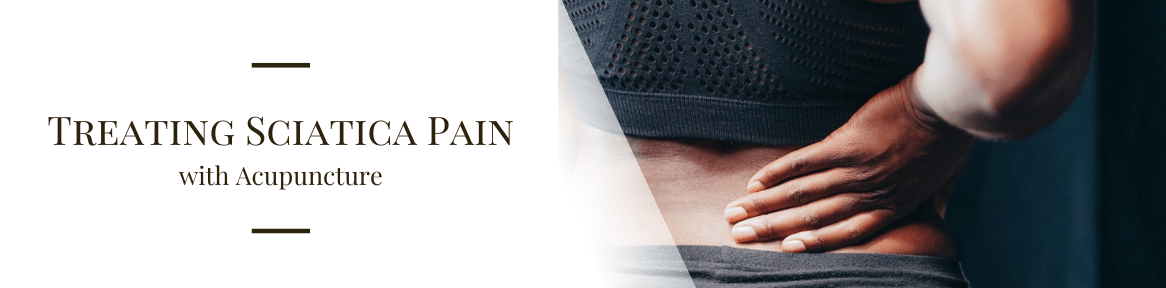
Anyone who has suffered from sciatic nerve pain can tell you it can be a very debilitating condition. It is typically caused by an impingement of the sciatic nerve in the lower back but the pain is actually felt radiating down the leg and in the buttock. There are several potential causes of sciatic pain including:
- Degenerative disc disease
- Lumbar spinal stenosis
- Spondylolisthesis
- Pregnancy
- Herniated lumbar disc (also known as a slipped disc)
Acupuncture is one of the most gentle and effective treatment options. Traditional medicine may prescribe medication to deal with the pain caused by sciatica but acupuncture is a drug-free option that treats the issue and not just the symptom.
Types of Sciatic Pain
Those suffering from sciatic pain often describe it as impacting just one side of the body and causing pain in the leg or buttocks that worsens when sitting; burning, tingling, or sometimes searing pain down the leg; weakness or numbness with difficulty moving the leg or the foot; or shooting pain that makes it difficult to stand.
What Acupuncture Does
Your acupuncturist will insert small needles into specific points on your body to trigger a response from your nervous system which tells your body to release those helpful endorphins, increase blood flow to the impacted area, and relax surrounding muscles.
Acupuncture and Chinese medicine is focused on restoring balance to the body so your acupuncturist may use either local or distal needling. Some practitioners might focus on acupuncture points on the inside of the calf or ankle or along the wrist or forearm area. Your acupuncturist will go over your complete health history and determine the best course of action to deal with your pain.
Relieving the Pain
Your acupuncturist also might suggest massaging specific acupressure points that can help to alleviate the pressure on that nerve. By applying gentle and circular pressure to the points, practitioners can achieve relaxation of the muscles and an easing of the pain.
Common acupressure points that might be addressed are UB23, also known as kidney tonifying point for lower back pain, which reduces muscle tension. Gallbladder 30 also helps to treat lower back pain and release tension throughout the hips and legs (which is often where the pain is most acute) and it can help boost overall circulation. Acupressure point UB40 addresses all major pain sensations along the spine. This point is also useful in treating stiffness, muscle spasms, knee stiffness, and arthritis. And finally UB62 can help to release lumbar tension and ease anxiety associated with sciatic nerve pain.
While acupuncture cannot heal the structural issues causing the sciatic pain, it is a safe and effective option to help manage the pain by increasing blood flow to the area and relaxing the lumbar muscles. Research also points to acupuncture being an effective pain management option for sciatica.
Your acupuncturist also might prescribe specific herbs for addressing your sciatic pain, along with needling and acupressure massage. Each patient is different so no two treatments will be the same and your acupuncturist will work with you to determine the best number of total treatments as well as frequency. Don’t spend another day with sciatic pain. Call your acupuncturist and make an appointment today.