
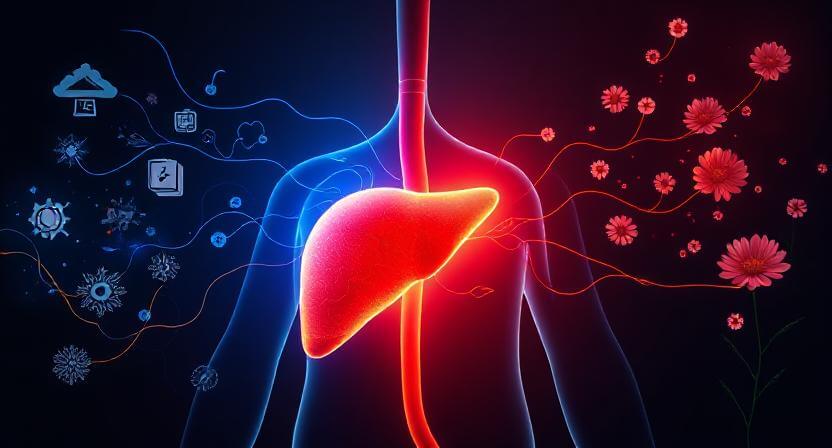
Have you been waking up between 1-3 am for no apparent reason? Do you feel wired but tired, no matter how much you rest? Or perhaps you find yourself constantly scanning for potential threats in your environment? These aren’t random occurrences or simply “who you are.” They’re signs of a profound connection between your emotions, your liver, your stress hormones, and patterns of hypervigilance that might be keeping you stuck in cycles of exhaustion.
Why This Connection Matters
I didn’t become a healer by accident. My journey began with my own need for healing and the profound lessons learned from witnessing my mother’s health struggles. After seeing her battle with chronic anxiety that eventually manifested as a serious illness, I discovered firsthand how our bodies keep the score of our emotional lives.
Her journey taught me that hormonal health and emotions aren’t separate issues—they’re intimate partners in your body’s complex communication system. I learned the hard way that unexpressed emotions weren’t just psychological burdens—they were creating real physiological blocks in my hormonal detoxification pathways.
My night of the soul followed years of hypervigilance, codependency patterns, and a profound disconnection from my authentic self. Growing up managing my mother’s emotions, I developed an exquisite sensitivity to the emotional states of others, constantly scanning for subtle shifts that might require my attention or intervention.
What I didn’t understand was how directly this hypervigilance was affecting my cortisol patterns and liver function. Every scan for potential threats, every moment spent in other people’s emotional worlds, every boundary crossing I allowed was keeping my stress response system chronically activated.
The turning point came when I recognized that what I called “being sensitive” or “being responsible” was a trauma response keeping my nervous system locked in a state of perpetual vigilance. This state made a healthy cortisol rhythm and proper liver detoxification physiologically impossible.
The Liver-Emotion Connection
Let’s explore something that Western medicine rarely discusses – the intimate connection between your liver function and your emotional processing.
In Traditional Chinese Medicine, spring is the season of the liver—our primary organ of detoxification for both hormones and emotions. Just as the liver processes toxins from our blood, it’s also associated with processing emotions, particularly anger, frustration, and resentment.
The turning point in my healing journey came when I recognized how my patterns of self-silencing, people-pleasing, and boundary violations were creating a perfect storm of emotional stagnation. Every suppressed feeling, every swallowed “no,” every resentment I didn’t acknowledge was creating an additional burden on my detoxification pathways.
Unexpressed emotions require physiological resources to contain. People-pleasing creates resentment that burdens the liver. Boundary violations lead to anger that affects the liver meridian. Self-silencing causes emotional “congestion” similar to physical stagnation. Perfectionism keeps the body in a stress response that impairs detox.
The relationship between your liver and your emotions mirrors the most fundamental relationship in your life – the one you have with yourself. When you silence your emotions, judge them as inappropriate, or push them aside to care for others, you’re engaging in a form of self-abandonment that your liver registers physically. Just as your liver needs to process and release toxins to function optimally, your emotional self needs acknowledgment and expression for your whole being to thrive.
This isn’t just about physical detoxification – it’s about honoring your complete self, including the parts you’ve learned to hide. My mother’s journey showed me that emotional suppression wasn’t just a psychological pattern – it was a physical burden her body carried until it could no longer cope.
You May Love To Read: Breaking the Cycle: How Self-Abandonment Impacts Your Hormonal Health
The Light-Hormone Connection
I learned the hard way that authentic connection can’t be found in isolation. After my mother’s passing, I retreated into workaholic tendencies and achievement addiction, unconsciously recreating childhood patterns of emotional disconnection. What I didn’t understand was how profoundly this isolation was affecting my hormonal health.
The light-hormone connection is profound. Sunlight directly triggers hormone production. Morning light exposure sets the cortisol rhythm for the day. Light regulates melatonin for sleep quality. Natural light exposure balances mood-regulating hormones. And seasonal light changes require intentional adaptation.
But there’s a deeper pattern of isolation that often underlies disconnection from natural light. Isolation often begins as protection against vulnerability. Digital connection can substitute for authentic connection. Achievement addiction can mask loneliness. Work becomes a refuge from relationship discomfort. And disconnection becomes both a symptom and a cause of hormonal imbalance.
Light exposure isn’t just about vitamin D—it’s about synchronizing your entire hormonal orchestra. When we live disconnected from natural light, our hormones operate without their natural conductor.
The turning point in my healing journey came when I recognized that my tendency toward isolation wasn’t a personality trait—it was a protection mechanism with roots in childhood experiences. Just as I needed to reconnect with natural light to balance my hormones, I needed to reconnect with an authentic relationship to heal my nervous system.
Hypervigilance & Cortisol Patterns
I discovered my hypervigilance wasn’t just anxiety—it was a sophisticated survival strategy that began in childhood. Growing up managing my mother’s emotions, I developed an exquisite sensitivity to the emotional states of others, constantly scanning for subtle shifts that might require my attention or intervention.
Cortisol is your primary stress hormone. It’s designed for short-term emergency response, helps regulate blood sugar and metabolism, affects every cell and system in your body, and works best in a healthy rhythm, not constant elevation.
The hypervigilance-cortisol connection explains so much: hypervigilance keeps stress response chronically activated, childhood emotional management creates vigilance patterns, scanning for threats becomes an unconscious baseline, nervous system gets stuck in sympathetic dominance, and boundary violations maintain hypervigilant state.
The turning point in my healing journey came when I recognized that what I called “being sensitive” or “being responsible” was actually a trauma response keeping my nervous system locked in a state of perpetual vigilance. This state made healthy cortisol rhythm physiologically impossible.
Breaking the hypervigilance cycle requires creating environmental cues of safety for your nervous system, establishing clear boundaries to reduce vigilance needs, practicing presence instead of scanning for future threats, developing self-regulation skills for stress response, and remembering that hypervigilance was protection, not a flaw.
Read Also: How to Communicate Health Boundaries Without Guilt and Strengthen Relationships
Breaking the Cortisol-Codependency Cycle
I spent years ignoring my body’s signals about my relationships until physical symptoms became too loud to dismiss. Growing up managing my mother’s chronic anxiety, I developed a nervous system wired for hypervigilance and people-pleasing—always scanning, always adjusting, always abandoning myself to tend to others.
The cortisol-codependency connection is profound: codependency keeps stress response chronically activated, managing others’ emotions triggers cortisol release, boundary violations signal danger to nervous system, people-pleasing creates biological stress state, and hypervigilance depletes stress resilience over time.
Your body speaks to you through specific signs: fatigue that worsens after certain interactions, tension headaches related to relationship stress, digestive issues triggered by boundary violations, sleep disruption connected to relationship dynamics, and anxiety that increases before social obligations.
What I didn’t realize was how this codependency pattern was directly affecting my stress hormones. Every time I took responsibility for someone else’s emotions, my cortisol would spike. Every boundary I failed to set kept my nervous system in a state of high alert. Every instance of people-pleasing signaled danger to my body, even as my mind called it “being kind” or “being responsible.”
The turning point in my healing journey came when I connected my physical symptoms to specific relationship patterns. The fatigue after certain interactions, the headaches before family events, the digestive issues when I couldn’t say no—these weren’t random malfunctions but my body’s wisdom speaking the truth my people-pleasing patterns wouldn’t allow me to acknowledge.
Healing Across Generations
The thread running through all of these connections is the relationship you have with yourself. When you abandon yourself through suppressing emotions, isolating from connection, maintaining hypervigilance, or prioritizing others’ needs before your own, you’re not just making emotional choices. You’re triggering physiological changes that affect your hormones, your detoxification, and ultimately your capacity for authentic wellness.
Your healing journey begins with being seen, heard, and understood—starting with how you see, hear, and understand yourself. The first step isn’t another supplement or diet—it’s reconnecting with your body’s signals that you’ve been trained to ignore. It’s recognizing the wisdom in your emotions, even the uncomfortable ones. It’s honoring your need for both connection and boundaries.
When you begin treating your feelings – especially difficult ones like anger or resentment – as messengers rather than nuisances, you’re not just supporting your liver’s physical function. You’re reclaiming the relationship with yourself that creates the foundation for authentic connection with others.
This work matters beyond individual healing – when we transform our relationship with our emotions, we break intergenerational patterns that have kept families stuck in cycles of unexpressed feeling and mysterious illness for generations. Your healing becomes a powerful legacy that extends far beyond your own life.
What signals might your body be sending that you’ve been ignoring? Which of these patterns resonates most with your experience? Remember: Both your emotions and your hormones deserve healthy processing. Your body’s signals aren’t weaknesses – they’re wisdom trying to guide you toward balance.
Let’s connect other ways too! Follow me here on Instargram @doctorrileysmith and at youtube @doctorrileysmith
Related Articles For You:
The Hidden Connection Between Blood Sugar and Your Emotional Well-being